

If you're searching for how to stop ads in games on iPhone, encrypted DNS filtering is one of the simplest places to start. It can reduce advertisements loaded from known ad domains in supported games. For games played in Safari, a content blocker may help too. Neither method removes every ad, particularly rewarded videos or promotions built into the game.
The difference matters when a full-screen advertisement interrupts your puzzle game after every level. Some ads come from separate advertising networks that DNS filtering can block. Others arrive through the same systems that deliver game content, making them harder to filter without affecting gameplay.
You don't need to jailbreak your iPhone or install complicated networking software. This guide explains what causes those interruptions, how to configure filtering on iOS, and how to tell whether the setup is working.
Why Ads Appear in iPhone Games
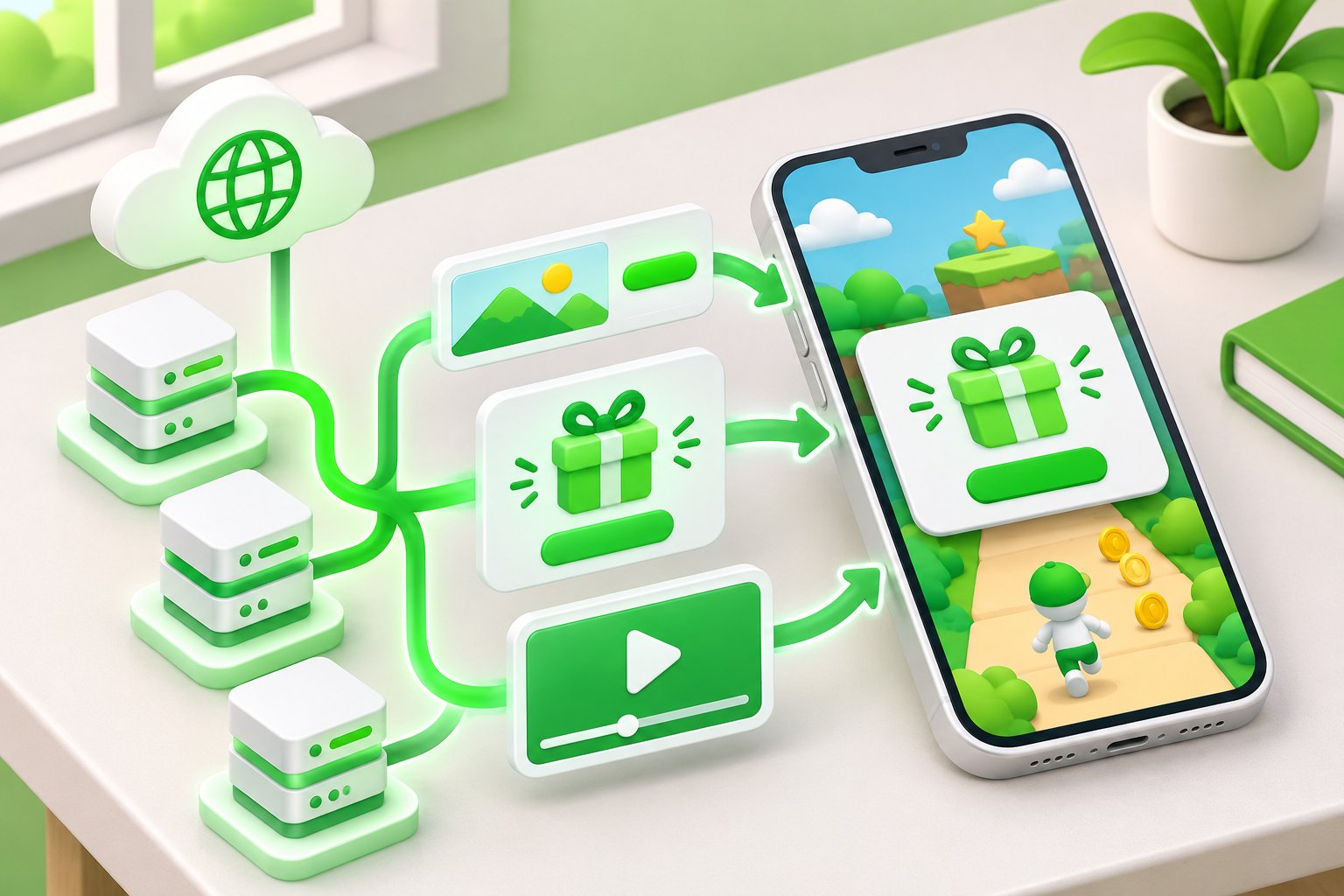
You finish a level in a free puzzle game. Before the next level loads, a video advertisement takes over the screen. A few minutes later, another appears.
The game isn't necessarily malfunctioning. Many free games are designed around advertising revenue.
Developers can earn money when advertisements are displayed, viewed, clicked, or completed, depending on their agreements with advertising providers.
The game usually contains software that requests advertising content from outside services. When you reach a particular point, such as finishing a level, the game asks for an eligible advertisement and displays it.
Not every advertisement uses the same delivery method.
That determines whether an iPhone ad blocker can affect it.
The Main Types of Ads in iPhone Games
Before changing any settings, identify which ads are interrupting your game.
Banner ads
These appear in a fixed area, usually along the top or bottom of the screen.
A word game might keep a banner visible beneath the letter tiles. A casual racing game might display one between menu buttons.
When the banner loads from a separate advertising domain, DNS filtering may prevent its content from arriving.
However, the game may continue reserving space for the banner.
You might see an empty rectangle instead of an advertisement.
Interstitial ads
These are full-screen advertisements that interrupt gameplay.
A game might display one after completing a level, restarting a challenge, or returning to the main menu.
Some interstitials come from external advertising networks.
DNS filtering may stop those requests when they use recognizable advertising domains.
Other interstitials may continue appearing because the filter cannot identify or block their delivery source.
Rewarded video ads
Rewarded videos offer an optional benefit in exchange for watching advertising.
For example, a game may let you watch a video to receive additional coins or another attempt at a failed level.
These advertisements are often connected to the game's reward system.
If filtering stops the video from loading, the game may also withhold the reward.
Blocking the advertising request does not automatically satisfy the game's reward conditions.
Native advertising and game promotions
Some advertisements resemble ordinary game menus.
A developer may promote another game inside its own application, or display a special offer using the same systems that deliver regular game content.
DNS filtering often has limited control over these promotions.
If the advertisement and essential gameplay both come from the same domain, blocking that domain may cause more problems than it solves.
In-game purchase offers
Some games regularly advertise paid items, optional upgrades, or an ad-free version.
These offers are often built directly into the interface.
An encrypted DNS filter cannot reliably remove an ordinary purchase button or promotional screen that is part of the installed game.
Why Some Games Show More Ads Than Others
Advertising frequency is mainly a game design decision.
One developer may display a banner throughout gameplay. Another may show a full-screen ad after several levels. A third may depend on voluntary rewarded videos.
This is why two games can behave differently on the same iPhone, even when you use the same filtering settings.
Consider a simple matching game.
The game may contact a separate advertising service whenever you complete a round.
If the filtering service blocks that advertising domain, the next round might start without an ad.
But another game may deliberately pause between rounds while its advertising screen loads.
If the advertising request fails, the pause may remain.
You could end up staring at a blank screen instead of watching an ad.
Blocking advertising content and removing advertising-related interruptions are not always the same thing.
Judge the result by whether the game becomes more pleasant to use, not only by whether the ad image disappears.
Do Game Ads Track Activity?
Some advertising services collect information for ad selection, measurement, fraud prevention, and analytics.
What gets collected depends on the game, the advertising provider, device settings, and applicable permissions.
On iPhone, App Tracking Transparency allows you to control whether apps receive permission for certain tracking across other companies' apps and websites.
You can review this under Settings, Privacy & Security, then Tracking.
Turning off tracking permission can limit covered tracking activities.
It doesn't require the game to stop showing ads.
The developer may still display contextual advertising or other promotions that don't depend on the denied permission.
DNS filtering addresses a different part of the process.
It may prevent requests to recognized advertising and tracking domains from completing when those requests use the configured resolver.
That can reduce some unwanted connections.
It doesn't prevent every possible form of data collection.
If privacy matters to you, review the game's App Store privacy information, tracking permissions, and the DNS provider's policies separately.
Why iPhone Doesn't Have One Switch for Every Game Ad
iPhone includes several controls that can affect advertising or tracking.
They aren't interchangeable.
Safari content blockers operate on supported website content.
App Tracking Transparency controls certain tracking permissions.
Encrypted DNS filtering can restrict access to selected domains.
None provides universal control over every advertisement displayed inside every installed game.
For example, enabling a Safari blocker won't automatically change the advertising screen inside a game downloaded from the App Store.
Likewise, denying tracking permission doesn't guarantee that a game will stop showing full-screen ads.
If you want fewer interruptions, identify how the advertisements are delivered and use the appropriate tool.
How Encrypted DNS Helps Filter Game Ads
Encrypted DNS filtering works before some advertising content reaches your phone.
It doesn't edit the game interface.
Instead, it can prevent connections to domains identified as advertising or tracking services.
That makes it useful for certain types of in-app advertising, with clear limitations.
What DNS Does When You Open a Game
DNS stands for Domain Name System.
When an app needs to contact a service identified by a domain name, DNS helps it find the network address associated with that name.
A game may communicate with different services for:
-
Player accounts and sign-in.
-
Saved progress.
-
Multiplayer connections.
-
Game updates.
-
Analytics.
-
Advertising.
-
Optional purchases.
These services may use different domains.
A normal DNS resolver returns the information needed to reach the requested service.
A filtering DNS resolver checks the requested domain against its rules before responding.
If the domain appears on an applicable blocklist, the resolver may return a response that prevents the connection.
Suppose a game requests an advertisement from a separate ad-serving domain.
If your DNS provider blocks that domain, the game may be unable to download the ad.
The game then decides what happens next.
It might continue playing, leave an empty advertising space, display an error, or request another advertisement.
The filtering service doesn't control that decision.
What DNS over HTTPS Means
DNS over HTTPS, or DoH, encrypts DNS requests between your device and the selected DNS resolver.
Traditional unencrypted DNS requests can be visible to parts of the network handling them.
DoH protects those requests while they travel to the resolver.
However, encryption alone doesn't block advertising.
Encrypted DNS and DNS filtering are two different functions.
Encryption protects the communication with the DNS service.
Filtering determines which requested domains the service allows or blocks.
You can use encrypted DNS without blocking a single advertisement.
For game ad reduction, choose a configuration that includes advertising domains rather than encryption alone.
Also understand the privacy tradeoff.
Your DNS provider still processes the domain requests it receives.
The provider's logging, retention, and privacy practices matter.
DoH doesn't make you anonymous or hide every activity from the apps and websites you use.
How Domain Filtering Reduces Some In-Game Ads
Consider a free word game that loads banner advertisements from an external advertising service.
The game requests an advertising domain.
Your iPhone sends the applicable DNS lookup to its configured resolver.
If the resolver recognizes and blocks the domain, the game may not receive the advertising content.
Several results are possible:
-
The banner no longer appears.
-
An empty banner space remains.
-
The game skips an advertising transition.
-
A loading indicator appears briefly.
-
The game tries another advertising service.
-
The game reports that an advertisement is unavailable.
None is guaranteed.
An advertising provider may use several domains, and the filtering service may not recognize all of them.
Some games also receive advertisements through domains shared with ordinary content.
Blocking a shared domain can interfere with the game itself.
For that reason, an effective DNS filter should not be judged by how aggressively it blocks every unfamiliar connection.
The better result is fewer unwanted requests while normal gameplay continues.
Which Game Ads Can DNS Filtering Affect?
| Advertising format | Can DNS filtering help? | What may remain |
|---|---|---|
| Banner from a separate advertising domain | Often possible | Empty banner space |
| Full-screen interstitial | Sometimes | Transition screen or loading pause |
| Rewarded video | Sometimes prevents loading | Reward may become unavailable |
| Promotion served by the game developer | Often limited | In-game promotion remains |
| In-game purchase offer | Usually not | Purchase button or offer screen |
| Ad in a Safari browser game | Sometimes | Website elements requiring Safari filtering |
| Ad from an unrecognized domain | Not reliably | Advertisement continues loading |
These are possible outcomes, not test results for a particular game.
A filter may work well with one title and have little effect on another.
Advertising behavior can also change when developers update their apps or switch advertising providers.
What Encrypted DNS Does Not Do
DNS filtering cannot reliably identify every advertising image or video.
It works primarily through domain lookups.
If advertising comes from a domain that also delivers essential game content, blocking it could disrupt the application.
Some apps may use alternative DNS methods or network connections that don't follow the system's selected resolver.
Other promotions may already be included in the installed game.
Encrypted DNS cannot remove those interface elements.
It also doesn't guarantee better frame rates, lower latency, or faster internet access.
Expect fewer ads in supported games, not an entirely ad-free iPhone.
Steps to Set Up DNS Filtering on iOS
Before installing anything, confirm that your iPhone connects to the internet normally.
Open a website in Safari.
Then open the game you want to improve.
Make sure the game loads and saves progress as expected.
This gives you a starting point for comparing its behavior after filtering is enabled.
Step 1: Check Your iOS Version and Existing Network Settings
Open Settings, then General, then About.
Find the iOS Version field.
The setup approach described here is suitable for compatible iPhones running iOS 17 or later, although individual menus can differ by version.
Next, check whether another service already manages your network configuration.
Open Settings, General, then VPN & Device Management.
Review any installed VPN or DNS configurations.
You don't need to remove them immediately.
First, identify their purpose.
A work or school phone might contain a managed configuration that you're not permitted to replace.
Your personal VPN may also handle DNS requests through its own service.
What to look for: An existing VPN or DNS configuration that could affect which resolver your iPhone uses.
What to avoid: Installing several competing DNS profiles without knowing which one is active.
If the phone is organization-managed, follow its restrictions rather than attempting to bypass them.
Step 2: Choose a Filtering Service That Targets Ad Domains
An ordinary encrypted DNS provider may not block ads.
Look for a configuration specifically designed to filter advertising and tracking domains.
The Zero Ads app provides an Ads & Trackers filtering option on supported iPhones using an encrypted DNS configuration.
For someone who wants fewer game ads without manually entering network addresses, an app-managed setup can be simpler than configuring a resolver manually.
Before selecting a service, check its description.
Look for clear answers to these questions:
-
Does the configuration use encrypted DNS?
-
Does it filter advertising domains?
-
Does it support compatible apps beyond Safari?
-
Can you turn filtering off easily?
-
Does the provider explain its privacy practices?
-
Will it conflict with your existing VPN?
-
Are the setup instructions appropriate for your iOS version?
Don't assume a DNS service labeled Security blocks ordinary advertising.
Security-focused filtering may primarily target malicious or fraudulent domains.
That's useful for a different purpose.
Good result: You can identify the actual ad-filtering mode and the DNS provider that handles your requests.
Poor result: The app makes broad promises without explaining whether filtering is DNS-based or what it can affect.
Step 3: Configuring Encrypted DNS Domain Filtering
Once you've chosen a suitable service, follow its official setup process.
Using the Zero Ads iPhone configuration as an example:
-
Install the app through its official App Store listing.
-
Open the app and locate the Ads & Trackers filtering option.
-
Select Turn on DNS filter.
-
Read the permission or configuration information presented by iOS.
-
Approve the configuration if you're comfortable with the selected DNS provider.
-
Follow the app's remaining activation instructions.
-
Return to the app and review the DNS status.
The purpose is to configure iOS to use a filtering resolver for applicable DNS requests.
You shouldn't need to enter a different address into every installed game.
If your iPhone requests confirmation for a configuration, read what it will change before approving it.
Good result: The app reports that its intended DNS configuration is active.
Problem result: The configuration appears installed, but the app says filtering is inactive.
Installation and activation aren't always the same step.
Complete the service's activation process before testing game advertisements.
Step 4: Verify That the DNS Configuration Is Active
Open the filtering app and inspect its connection status.
If it provides a status check, use it.
You can also review applicable configurations under Settings, General, then VPN & Device Management.
The exact controls depend on how the DNS service was installed and your iOS version.
Check that ordinary internet access still works.
Open Safari and visit a familiar website.
Then open a game that requires an internet connection.
If both connect normally, proceed to the advertising test.
If websites stop loading immediately after activation, temporarily turn off the new DNS configuration using the app's normal controls.
Check whether normal access returns.
If it does, the DNS configuration or its compatibility with your network deserves investigation.
Don't factory-reset the iPhone or install additional profiles to solve the problem.
Step 5: Test Ads in a Game You Already Play
Choose a game whose advertising behavior you know.
A familiar puzzle or word game is useful because you know when ads normally appear.
For example, you may expect a full-screen ad after finishing several levels.
Play normally until you reach that point.
Watch what happens.
Signs filtering may be helping:
-
A banner stops loading.
-
A full-screen advertisement no longer appears.
-
An advertising area remains empty.
-
The game reports that an ad isn't available.
-
A previously ad-filled transition becomes shorter.
Signs the result needs closer attention:
-
A blank screen interrupts gameplay.
-
A reward video becomes unavailable.
-
The game cannot connect to an account.
-
Progress stops saving.
-
Normal game content fails to load.
A filter that removes one advertisement but breaks cloud saves is not an improvement.
Test gameplay functions alongside advertising behavior.
Don't judge the filter from one ad opportunity.
Ad availability can vary naturally, even without filtering.
Step 6: Test on WiFi and Cellular Data
After confirming that the filter is active, test the game using your normal home WiFi connection.
Then switch to cellular data, if your plan and device allow it.
This comparison can reveal configuration differences.
An encrypted DNS setup intended for system-level use may operate across eligible network connections, but VPN settings, managed networks, and individual app behavior can affect the result.
For example, your home WiFi might work with the selected DNS resolver while a restricted public network prevents access to it.
Or another VPN may become active and change how DNS requests are handled.
What to look for: The filtering app continues reporting the intended active configuration after changing networks.
What to watch for: A different result on cellular data does not necessarily mean the original filtering setup is broken.
Check the current DNS and VPN status before changing settings.
Avoid editing several network options simultaneously.
Step 7: Enabling Safari Content Blocking
If you play browser-based games, add Safari content blocking as a separate step.
This is useful because Safari content blockers can target supported website elements rather than relying only on domain filtering.
On newer iOS versions:
-
Open Settings.
-
Tap Apps.
-
Select Safari.
-
Open Extensions.
-
Find your installed content blocker.
-
Enable the available extension controls.
-
Review its permissions for any Safari profiles you use.
On iOS 17, the path is generally Settings, Safari, then Extensions.
Follow the installed content blocker's own instructions where the menus differ.
After enabling it, open Safari and revisit a website where you previously saw advertising.
Check whether supported banner images, embedded advertising resources, or other page elements are affected.
Safari content blocking is not the same as blocking ads inside App Store games.
A browser extension usually cannot modify the interface of an unrelated installed game.
Use it for Safari browsing and browser-based games.
Use DNS filtering for supported domain-level requests across eligible applications.
Step 8: Test a Browser Game Separately
Open a game that runs directly inside Safari.
Look at its advertising.
Some browser games place banners around the gameplay area.
Others load videos or promotions within the page.
Safari content blocking may affect those elements, depending on the site's design and the blocker's rules.
Now compare that with a game installed from the App Store.
The standalone game doesn't automatically use Safari's content-blocking controls.
Even if both games display similar advertisements, they can respond differently to filtering.
If you want to know which tool is helping, test the layers separately.
Disable the Safari blocker temporarily while leaving encrypted DNS enabled.
Observe the browser game's behavior.
Then restore the Safari blocker.
This won't produce a laboratory-grade measurement, but it can help identify which configuration affects the advertisements you normally see.
Step 9: Review App Tracking Permissions
If you also want to reduce certain tracking activities, review the iPhone's tracking permissions.
Open Settings, Privacy & Security, then Tracking.
You'll see the available controls for apps covered by Apple's App Tracking Transparency framework.
Review the permissions according to your preferences.
A game that doesn't have permission for covered tracking can still display advertising.
For example, it may show an ordinary banner that doesn't depend on tracking your activity across other companies' apps.
Changing the tracking permission won't necessarily remove that banner.
Likewise, encrypted DNS filtering doesn't replace App Tracking Transparency.
One controls certain app permissions.
The other may block requests to selected network domains.
Use each for its intended purpose.
Step 10: Restore Normal Behavior if Filtering Breaks a Feature
Suppose you enable DNS filtering and your game stops connecting to its account server.
Don't assume the game itself is damaged.
First, turn off the DNS filter through its normal controls.
Close and reopen the game if necessary.
Check whether the account connection works again.
If the feature works with filtering disabled but fails when filtering is active, the configuration may be affecting a required network request.
Some filtering services offer exceptions or different levels of blocking.
Review those options only if the provider supports them.
Avoid adding unknown configuration profiles or weakening unrelated iPhone security settings.
If the game requires a connection that your filter blocks, keeping filtering disabled for that activity may be the practical choice.
The purpose is to reduce interruptions without making the game unusable.
Understanding Coverage and Limitations

Encrypted DNS filtering has a fairly specific job.
It can prevent connections to selected domains when the application uses the configured resolver.
That can reduce some advertising and tracking requests.
It doesn't inspect a finished game screen and decide which objects are advertisements.
Once you understand that distinction, the remaining limitations make more sense.
Why Some Ads Continue After DNS Filtering Is Enabled
A game can load advertising through several different systems.
Some use dedicated advertising domains.
Others use shared infrastructure that also delivers ordinary game content.
If advertising and gameplay come from the same domain, blocking it may stop more than just the ads.
The filter can't reliably separate individual images or videos inside an encrypted connection simply by inspecting the domain name.
Some games also use network methods that don't follow the iPhone's selected system DNS resolver.
In that case, the filtering provider may never receive the relevant lookup.
Other promotions may already be included in the game's installed files.
No external advertising request is needed to display them.
This explains why a working DNS filter can reduce ads in one game while leaving another almost unchanged.
Why Rewarded Video Ads May Still Play
Rewarded videos are often connected to specific gameplay actions.
A game may offer extra coins, another attempt, or a temporary bonus when a player completes an advertisement.
The game typically needs to confirm that the required advertising event occurred before granting the reward.
If filtering prevents the video from loading, the game may simply report that no advertisement is available.
You don't automatically receive the reward.
Other rewarded ads may continue playing because their delivery domains aren't blocked.
This creates a practical decision.
If you find rewarded videos useful, aggressive DNS filtering may interfere with that part of the game.
If you rarely use them, blocking some advertising requests may still improve the overall experience.
Neither result means the filter has universal control over the game's reward system.
Why Full-Screen Ads Sometimes Leave a Blank Screen
A game can reserve time or screen space for an advertisement before knowing whether the advertising content will load.
Imagine finishing a level.
The game opens its full-screen ad view and requests a video.
The DNS filter blocks the relevant advertising domain.
The game receives no usable ad content, but its interface still opens the advertising screen.
You may see a blank panel or a short pause.
The absence of a visible ad suggests the request may have been affected, but the interruption hasn't necessarily disappeared.
If the blank screen lasts longer than the original advertisement, filtering may make that particular game less convenient.
Temporarily disable the filter and compare normal gameplay behavior.
Choose the configuration that works best, rather than treating every blocked request as a benefit.
Why YouTube and Social Video Ads Are Different
Advertising inside major video and social platforms is often delivered through systems closely integrated with ordinary content.
A DNS filter may be unable to distinguish an advertisement from a requested video using domain names alone.
Blocking the relevant domain could also stop normal content.
The same limitation can apply to iPhone games that deliver advertising through shared game infrastructure.
That's why claims of universal video ad removal through DNS filtering should be treated cautiously.
A provider might successfully reduce some known advertising requests without affecting every video advertisement.
Coverage depends on the application, delivery method, and network.
Does DNS Filtering Work With Every iOS App?
No.
A system-level DNS configuration can affect eligible requests from applications that use the configured resolver.
It cannot guarantee that every app will use that DNS path.
Some applications use their own resolution methods.
Others connect through systems that the selected filter cannot identify as advertising.
VPN configurations can also change DNS behavior.
A filter may be correctly installed while particular game ads continue appearing.
That doesn't automatically indicate a faulty configuration.
Test the apps you actually use.
If a game continues displaying advertisements but other supported advertising requests are reduced, you may be encountering a coverage limitation.
Can DNS Filtering Affect Game Performance?
DNS filtering can prevent selected network requests.
That may reduce some unnecessary advertising traffic.
However, it doesn't automatically increase frame rates or make games load faster.
A game's performance depends on its design, the iPhone's hardware, available memory, internet connection, and other conditions.
DNS requests also depend on the availability of the selected resolver.
If that resolver becomes unreachable, apps may struggle to establish connections.
This is why checking ordinary internet access after activation matters.
If the filter causes connection problems, restore the previous configuration and investigate before continuing.
What About Privacy?
Encrypted DNS helps protect DNS requests while they're transmitted to the selected resolver.
Filtering may also prevent certain connections to known tracking domains.
Both can be useful.
But the DNS provider still handles the requests routed to it.
Its privacy policy should explain how it processes those requests and what information it retains.
Encrypted DNS doesn't automatically prevent an app from collecting information directly through its own services.
It also doesn't make browsing anonymous.
If privacy is an important reason for installing an ad blocker for iPhone games, pay attention to both the filtering service and the game's own permissions.
Avoid services that make unclear claims about complete anonymity or universal tracking prevention.
Common Mistakes When Trying to Block Game Ads on iPhone
Most unsuccessful setups come from using a tool outside the area it controls.
These are the mistakes worth checking before installing another ad blocker.
Mistake 1: Installing Only a Safari Ad Blocker
Safari content blockers are designed for supported website content.
They don't automatically control the interface of installed games.
If your main complaint is a full-screen ad inside a puzzle game, a Safari extension alone is unlikely to address it.
Keep the Safari blocker for browsing.
Use domain filtering when you want to reduce suitable network advertising requests in supported games.
Mistake 2: Changing WiFi DNS Without Understanding the Scope
Manually changing DNS settings for a WiFi network is different from installing an encrypted, system-level filtering configuration.
A WiFi-specific setting may apply only to that saved network.
When you switch to cellular data, the phone may use another resolver.
Also, entering a DNS server address manually doesn't automatically turn on DNS over HTTPS.
If you want encrypted DNS, choose a configuration that explicitly supports it.
Confirm the active resolver instead of assuming that any DNS change provides encryption and ad blocking.
Mistake 3: Expecting Every Rewarded Video to Disappear
Rewarded videos are optional advertising features tied to gameplay rewards.
Some may be blocked, while others continue loading.
When a video is blocked, the reward may become unavailable too.
If you regularly watch ads to gain extra attempts, consider whether filtering improves your experience.
Don't expect a blocked video to grant the same reward without being watched.
Mistake 4: Assuming Tracking Permissions Control Ads
Disabling covered tracking permission can limit certain data-sharing activities.
It doesn't stop a developer from showing ordinary advertisements that don't depend on that permission.
Likewise, DNS filtering may affect advertising domains without controlling the app's tracking permission.
Review both settings separately.
Don't interpret a continuing banner as proof that tracking permission wasn't respected.
Mistake 5: Using Multiple DNS or VPN Configurations Without Checking Them
Installing several network filtering services can make the active configuration difficult to identify.
A VPN may route DNS queries through its own resolver.
Another DNS profile may replace the filtering configuration you expected to use.
If ads suddenly return after activating a VPN, check which service is handling DNS.
Avoid adding more profiles until you understand the existing setup.
One correctly configured service is easier to troubleshoot than several conflicting ones.
Mistake 6: Assuming an Empty Ad Space Means Nothing Was Blocked
An empty rectangle where an ad normally appears can indicate that the advertising resource failed to load.
The game may still reserve the original screen area.
DNS filtering doesn't redesign the interface to reclaim that space.
If the blank area doesn't interfere with gameplay, you may consider the result acceptable.
If it produces long pauses or frozen screens, test with filtering disabled.
The practical outcome matters more than the appearance of an empty banner.
Mistake 7: Downloading Unknown Ad-Blocking Profiles
Configuration profiles can change important network settings on an iPhone.
Don't install an unfamiliar profile just because a website promises complete ad removal.
Review the source and the permissions it requests.
Prefer official app listings and clearly documented setup methods.
If you're unsure what a profile changes, don't install it.
Avoid disabling device protections or installing modified games to get around ordinary advertising.
What to Do If Ads Still Appear in iPhone Games
If you have filtering enabled but advertisements keep appearing, work through the following checks before changing more settings.
Check the Filtering Mode
Open your filtering application and inspect the active mode.
Make sure it includes advertising domains.
A configuration focused only on malicious websites may allow ordinary game advertising.
Check the reported connection status.
If the filtering service is inactive, complete the activation process first.
Then reopen your game.
Don't assume that having the application installed means DNS filtering is running.
Identify the Ad Type
Look at the advertisement you're trying to remove.
Is it a banner?
A full-screen video between levels?
An optional reward video?
A promotional panel in the game's store?
These formats behave differently.
An external advertising banner may be affected by domain filtering.
A purchase offer built into the game is unlikely to disappear.
Identifying the format helps you decide whether further troubleshooting makes sense.
Compare the Game With Filtering On and Off
Choose a repeatable activity where the game normally displays an advertisement.
For example, complete a level or return to the main menu.
Observe what happens with filtering enabled.
Then temporarily disable filtering and repeat the activity.
Ad availability can change between attempts, so avoid drawing conclusions from a single comparison.
If certain ads regularly fail to load only while the filter is active, the DNS configuration may be affecting those requests.
If the experience stays the same, the advertising source may not be covered.
Restore your preferred filtering setting afterward.
Check Whether the Game Still Works Normally
Advertising reduction shouldn't interfere with essential game functions.
Check whether the game can:
-
Load its main screen.
-
Connect to required online services.
-
Sign in to your account.
-
Save progress.
-
Start another level.
-
Complete ordinary gameplay.
If something fails only when filtering is enabled, temporarily turn it off and repeat the action.
A domain used by the game may have been blocked.
Don't immediately delete and reinstall the game.
Some games store progress locally, and deleting the app may remove information that hasn't been backed up.
Check the DNS Connection After Switching Networks
If filtering works at home but behaves differently on cellular data or public WiFi, check the active configuration.
Open the filtering app.
Confirm that the intended DNS mode remains enabled.
Review whether a VPN is running.
A work, school, or public network may have restrictions that affect DNS connectivity.
Test again on a familiar network before making more changes.
Don't repeatedly reset network settings without identifying the problem.
Check Whether the Game Has an Official Ad-Reduction Option
Some game developers offer a paid option that removes selected advertisements.
Others provide a separate paid version of the game.
These are ordinary developer-supported choices.
Read the description before purchasing.
For example, a purchase might remove forced full-screen ads but leave optional rewarded videos available.
Another might remove banner ads only.
Don't assume that an offer labeled Remove Ads changes every advertising feature.
This isn't necessary for trying DNS filtering, but it can be a practical alternative when the game's ads are delivered through methods the filter cannot affect.
Know When Further Troubleshooting Won't Help
If your DNS configuration is active, ordinary internet access works, and the game continues showing certain ads, the remaining advertisements may be outside the filter's coverage.
The game might use shared domains, embedded promotions, or alternative network methods.
Adding another DNS profile may not change that.
You can continue using filtering for the requests it does block, turn it off for games where it causes problems, or consider an official ad-reduction option.
There isn't always a technical setting that removes the remaining ads without interfering with gameplay.
How to Stop Ads in Games on iPhone Without Complicating Your Setup
You don't need several ad blockers running at once.
For most people, a practical approach is to configure one suitable encrypted DNS filtering service, confirm that it's active, and test the games they regularly play.
If you also use Safari for browser games, enable a supported Safari content blocker separately.
Then check whether the combination improves your normal experience.
A simple checklist is enough:
-
Choose a DNS service that filters known advertising domains.
-
Activate the configuration through supported iOS settings.
-
Confirm ordinary internet access still works.
-
Test a game where you regularly encounter ads.
-
Check whether banners or interstitials are reduced.
-
Make sure account access and game progress still work.
-
Use Safari content blocking for compatible browser content.
-
Remember that rewarded videos and embedded promotions may remain.
If you notice connection errors after enabling filtering, turn it off temporarily and compare the result.
If you want to reduce tracking as well, review App Tracking Transparency and the game's privacy information.
The useful result is fewer interruptions with normal gameplay intact.
There's little benefit in blocking one advertisement if the game stops loading levels or saving progress.
FAQ
Can you block all ads in iPhone games?
No. DNS filtering can reduce advertisements loaded from known advertising domains, but it cannot reliably remove every ad from every iPhone game. Rewarded videos, embedded promotions, and ads delivered through shared game infrastructure may remain. The results depend on the game, filtering service, and network configuration.
Does DNS filtering work across all iOS apps?
DNS filtering can affect supported requests from apps that use the selected DNS resolver, including some iPhone games. It doesn't guarantee coverage across every application because some apps use other resolution methods or advertising delivery systems. VPN settings and network restrictions can also affect which resolver is used.
Why do some reward video ads still play?
Some rewarded videos use domains that aren't blocked or delivery methods that DNS filtering cannot reliably separate from game content. If a video is blocked, the game may also prevent you from receiving the associated reward. Blocking advertisements doesn't change the game's normal reward rules.
Start with one game that shows ads frequently. Enable encrypted DNS filtering, confirm the configuration is active, and compare what happens during normal play.
If some banners or full-screen ads disappear while the game continues working, you've made a useful improvement. If rewarded videos remain or another game shows no change, that may simply reflect how its advertisements are delivered.
You don't need to remove every ad to make an iPhone game less distracting. Fewer interruptions, sensible privacy settings, and a reliable connection are a practical result.